Expiry Dates Nobody Wrote Down: A Deprecation Readiness Plan for Aging NLP Stacks
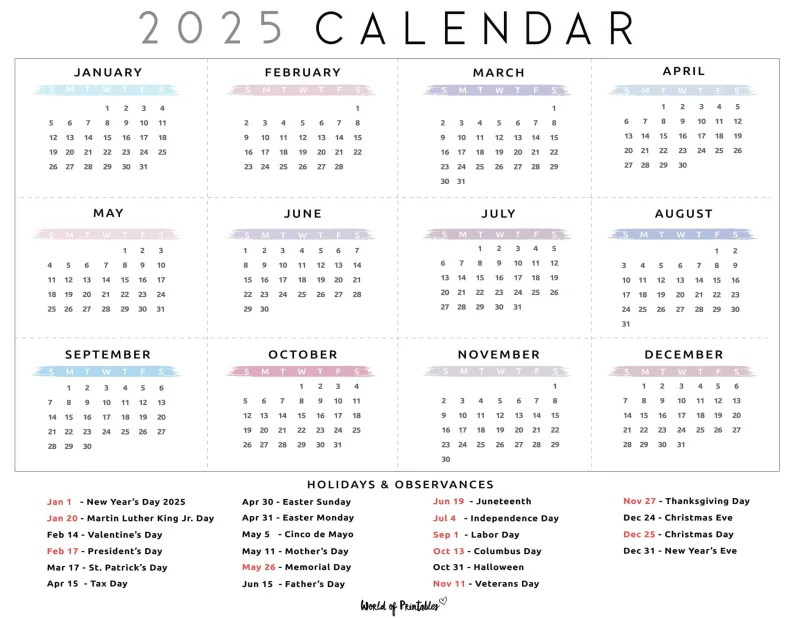
Photo: calendar planner deadline planning desk professional, via worldofprintables.com
The most stable-looking NLP system in an organization is often the one closest to a forced migration. It has not changed in eighteen months. The prompts work. The integration tests pass. And then a vendor announces that a model version reaches end of life in sixty days, or an SDK major version drops support for the endpoint the system depends on, and a stack that nobody has touched becomes the top priority for three teams at once.
Dependency aging is not a failure of engineering discipline. It is a predictable consequence of building on top of components that are revised on someone else's schedule. What separates teams that absorb a deprecation gracefully from teams that endure a quarter of firefighting is whether they noticed the signs early enough to plan.
Seven Signs Your System Is Aging in Place
1. The model version appears nowhere in your own configuration. If the exact model identifier is supplied by an SDK default, a gateway preset, or an environment variable that nobody has audited, you are not pinned — you are drifting. Version pinning is the single cheapest form of deprecation insurance available.
2. Token counts for identical inputs have started to shift. Tokenizer revisions change how text is segmented, and a shift in token counts alters cost, truncation behavior, and effective context length simultaneously. Teams that log token counts per request detect this within days; teams that do not typically discover it through a billing surprise.
3. The only deprecation channel you monitor is a support email. Announcements increasingly arrive through developer blogs, status pages, changelogs, and console banners. Assign someone to watch each channel on a fixed cadence, and record the date of the last review.
4. Your oldest evaluation baseline is younger than one quarter. Without a baseline that predates the current model, you cannot demonstrate whether a migration preserved quality — you can only assert it. Keep at least one frozen evaluation set and its recorded scores from an earlier generation of the stack.
5. Output parsing depends on formatting quirks. Prompts and parsers that rely on a particular model's idiosyncratic way of emitting JSON, bullet lists, or refusal language are the components most likely to break during a swap. Structured output constraints and tolerant parsers reduce that exposure considerably.
6. Transitive dependencies are invisible. The model is one dependency among several: the client library, the inference gateway, the embedding model behind a retrieval index, the vector store's distance metric, the reranker. A retirement anywhere in that chain can force a rebuild of artifacts that took weeks to generate.
7. Nobody can name the owner, or estimate the cost of a swap. If the question of what a migration would take cannot be answered in a day, the answer is that it would take far longer than anyone expects.
Building the Readiness Plan
The plan itself does not need to be elaborate, but it does need to exist before the announcement arrives.
Maintain a dependency bill of materials. One page listing every model, tokenizer, SDK, gateway, and index in the serving path, each with a pinned version, an owner, a renewal or support horizon where known, and a criticality rating. Review it quarterly. This document is what lets an engineering leader answer a vendor notice in an hour rather than a week.
Keep a standing compatibility harness. A regression suite that runs against any candidate model and produces a comparable quality report. It should cover the intents that generate revenue, the edge cases that generate support tickets, and the adversarial inputs that generate incident reports. Run it before every upgrade, not just before a forced one, so that the harness itself stays current and trusted.
Build one thin abstraction at the boundary. Not a sprawling framework — a narrow interface that isolates prompt construction, invocation, and response parsing. The goal is to make swapping the model a configuration change plus a QA cycle rather than a refactor.
Practice dual-running. Route a small percentage of live traffic to the candidate model and compare outputs on the same inputs. Offline scores and live behavior diverge often enough that dual-running should be standard practice, not a special project.
Budget the migration before it is mandatory. Estimate engineering hours, evaluation time, index rebuild costs, and the risk of a temporary quality dip. Migrations performed under deadline pressure cost materially more than the same work done on a planned schedule, and the difference shows up both in labor and in user-visible incidents.
Make Deprecation a Calendar Item, Not an Emergency
Two governance habits carry most of the weight. First, put every known support horizon on a shared calendar with a lead time that reflects your actual migration cycle — if a swap takes ten weeks of engineering effort, a sixty-day notice is not a warning, it is an outage. Second, run an annual tabletop exercise: pick your most critical model dependency, assume it is retired in ninety days, and walk through the plan. The gaps that surface in a tabletop are cheap to fix. The same gaps discovered during a real retirement are not.
Aging is not a defect. Every NLP stack built on external models will eventually face a forced migration. The question is whether that migration arrives as a scheduled maintenance window or as an unplanned incident — and that distinction is decided long before the announcement.