The True Price of Free: Rethinking Total Cost of Ownership When Choosing Open-Source NLP Models

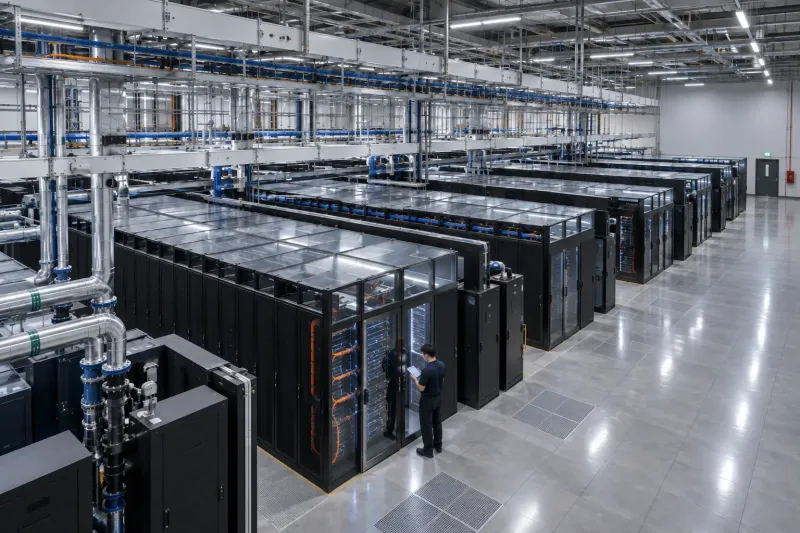
Photo: Japolinario, CC BY 4.0, via Wikimedia Commons
In the current NLP landscape, few debates generate more heat among technical decision-makers than the choice between open-source and proprietary models. The case for open-source is intuitive: no licensing fees, no vendor lock-in, full control over the stack. The case against it is less often articulated clearly, largely because the costs are distributed across budget lines that rarely appear in the same spreadsheet. This article attempts to consolidate those costs into a framework that supports rigorous, organization-specific decision-making.
The goal is not to declare a winner. The goal is to help engineering leads, CTOs, and technical product managers in the United States — where cloud infrastructure costs, labor markets, and compliance requirements create a specific economic context — make choices grounded in realistic total cost of ownership (TCO) rather than headline pricing.
The Seductive Math of Zero Licensing Costs
When a team evaluates a model like Meta's Llama series, Mistral's open-weight releases, or any of the growing catalog of community-developed models available through Hugging Face, the licensing cost is either zero or nominal. For organizations with tight budgets or philosophical commitments to open infrastructure, this is a meaningful advantage. It also tends to anchor the entire cost conversation in a way that crowds out more consequential variables.
Licensing is typically the smallest component of NLP infrastructure cost over a multi-year deployment horizon. The dominant cost drivers are infrastructure, talent, and maintenance — and open-source models shift these costs onto the deploying organization in ways that proprietary APIs do not.
Infrastructure: Where the Bill Arrives
Proprietary NLP APIs — OpenAI, Anthropic, Google Cloud's Vertex AI, AWS Bedrock, Cohere, and others — abstract away all infrastructure concerns. The deploying team pays per token or per request, and the provider handles compute, scaling, redundancy, and model versioning. The cost is variable and directly proportional to usage.
Open-source deployments require the organization to provision and manage the compute infrastructure itself. For models in the 7B to 13B parameter range, a minimum viable production deployment on AWS or Google Cloud typically requires GPU instances — at minimum, a single A10G or comparable accelerator for inference. At current US cloud pricing, a single A10G instance runs approximately $1.50 to $2.00 per hour. A high-availability deployment with redundancy and autoscaling can push that figure to $5,000 to $15,000 per month before accounting for storage, networking, and monitoring overhead.
For larger models — 70B parameters and above — the infrastructure costs scale substantially. Quantization techniques (GGUF, GPTQ, AWQ) can reduce memory requirements and allow deployment on less expensive hardware, but they introduce their own engineering overhead and may degrade model performance in ways that require careful validation.
Compare this to a mid-sized organization using GPT-4o via API at current pricing for, say, 50 million tokens per month: the cost is predictable, scales with actual usage, and requires zero infrastructure management. At lower usage volumes, the proprietary API is frequently the cheaper option when infrastructure costs are fully accounted for.
The Talent Premium
This is the cost that most TCO analyses underweight, and it is often the decisive factor for organizations outside major tech hubs.
Running open-source LLM infrastructure in production requires engineers who understand model serving frameworks (vLLM, TGI, Triton Inference Server), GPU memory management, quantization tradeoffs, batching strategies, and the operational rhythms of ML infrastructure. This is a specialized skill set. In the current US labor market, ML infrastructure engineers command salaries in the $180,000 to $280,000 range in competitive markets. Retaining even one such engineer costs more annually than many organizations would spend on proprietary API access.
Proprietary APIs require integration engineering — connecting to an endpoint, managing API keys, handling rate limits, and implementing retry logic. This is work that a general software engineer can perform competently. The talent requirement is lower-cost and more widely available.
For organizations that already employ ML infrastructure talent for other reasons, this calculus shifts. The marginal cost of running an additional open-source model on existing infrastructure is substantially lower. But teams that would need to hire specifically to support an open-source deployment should factor the full cost of that headcount into their analysis.
Fine-Tuning: Opportunity and Overhead
One of the most cited advantages of open-source models is the ability to fine-tune them on proprietary data. This is a genuine and meaningful capability. For organizations with domain-specific requirements — specialized legal language, proprietary product catalogs, niche scientific terminology — fine-tuning can yield performance improvements that no amount of prompt engineering against a general-purpose API will replicate.
However, fine-tuning is not free in any meaningful sense. A responsible fine-tuning pipeline requires curated training data (itself an expensive asset to build and maintain), compute for training runs, evaluation infrastructure to measure the effect of fine-tuning, and a versioning and deployment strategy for the resulting model artifacts. Organizations that treat fine-tuning as a one-time event rather than an ongoing practice often find that model performance degrades as their data distribution drifts, requiring repeated cycles of retraining.
Some proprietary providers — OpenAI, Cohere, and others — now offer fine-tuning as a managed service. The cost per training token is higher than running your own fine-tuning job, but the operational overhead is eliminated. For organizations whose fine-tuning needs are moderate and infrequent, managed fine-tuning services frequently deliver better ROI than self-managed pipelines.
Latency, Compliance, and Data Residency
Two factors often tip the decision in favor of open-source in ways that have little to do with cost in the narrow sense.
Data residency and compliance requirements — particularly for organizations operating under HIPAA, FedRAMP, or financial services regulations — may make it impossible to send data to third-party API endpoints regardless of cost. In these contexts, open-source deployment is not a cost decision; it is a compliance necessity. Organizations in these sectors should treat the infrastructure overhead as a regulatory cost of doing business rather than a mark against open-source models specifically.
Latency is a more nuanced consideration. Self-hosted models, deployed on infrastructure co-located with the application layer, can achieve lower end-to-end latency than API-based deployments that require round-trips to external endpoints. For real-time applications — conversational interfaces, live document processing, low-latency search — this can be a meaningful differentiator. For batch processing workloads, it typically is not.
A Decision Framework for Technical Leaders
Rather than a universal recommendation, the following heuristics reflect the conditions under which each approach tends to deliver superior ROI.
Open-source is likely the better choice when: the organization has existing ML infrastructure and specialized engineering talent; compliance or data residency requirements prohibit external API calls; the use case requires deep customization through fine-tuning on proprietary data; or usage volume is high enough that per-token API costs would exceed infrastructure costs at scale.
Proprietary APIs are likely the better choice when: the organization lacks ML infrastructure expertise; the use case is exploratory or early-stage and requirements may shift; usage volume is moderate and unpredictable; time-to-production is a priority; or the administrative overhead of managing infrastructure would distract from core product development.
The organizations that struggle most are those that choose open-source because it feels more technically sophisticated or economically prudent, without conducting the actual arithmetic. The models are free. The infrastructure, the talent, the maintenance cycles, and the opportunity costs are not. Building that full picture before committing is not a sign of excessive caution — it is the baseline standard for responsible technical decision-making.